
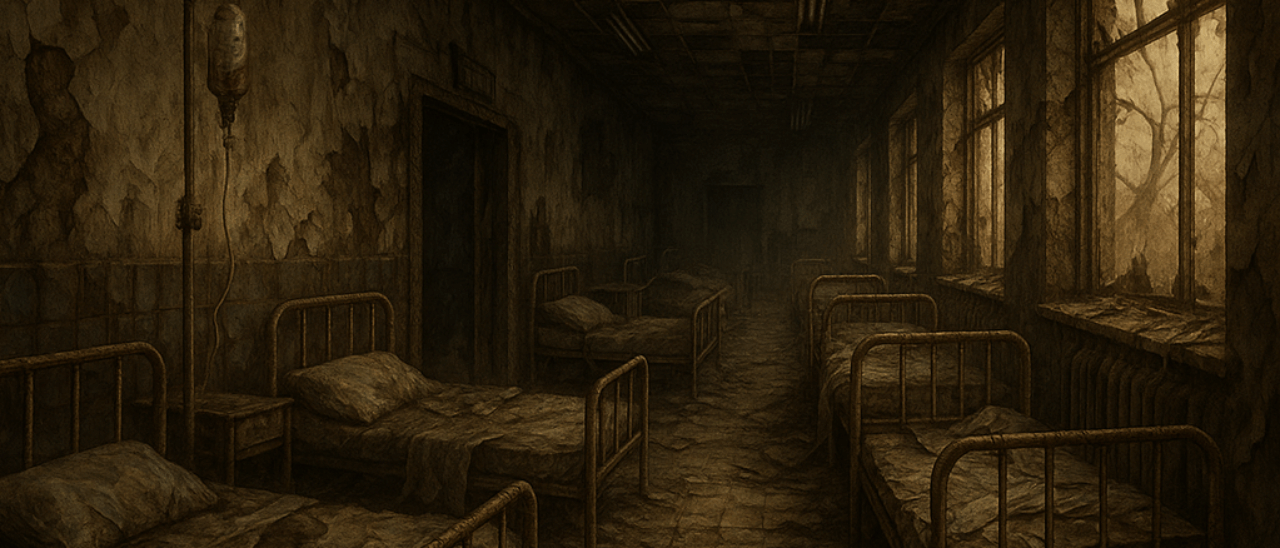
 Things You Don’t Talk About: Part 1 — The Cycle
So, here we are again—me, wandering off from the “series on change” I said I was doing. At this point, it’s become a bit of a running joke (mostly in my own head) that every time I sit down to write about one thing, ten other more pressing things rise up and demand attention. And today’s entry is one of those things. We’re going to talk about domestic violence.
Not hypothetically. Not academically. But as it’s lived. As I lived it.
Let’s start with the easy part: we’re all great at preaching when it comes to domestic violence, but practicing? Not so much. It’s easy to say “just leave.” Hell, it sounds like a clean exit strategy—clinical, simple, and tidy. But when you’re the one in it, nothing is clean, simple, or tidy.
Abuse doesn’t usually start with a black eye. It starts with a joke that isn’t funny. A snide comment that lands wrong but is quickly brushed off. It starts with convincing yourself *this isn’t a big deal.* That *maybe* you overreacted. That *maybe* you caused it. The worst part is, the abuser will *help* you reach that conclusion. “If you hadn’t said that…” “If you weren’t so dramatic…” You start to internalize the idea that you’re somehow to blame. That you’re the problem. That you deserve it.
That’s how the cycle begins.
The insidious part of domestic violence is just how *quietly* it sets in. The first time he ever laid into me—verbally—was over my military service. I was still in uniform, still carrying the weight of that identity. And he’d make these passive-aggressive remarks like, “Veterans are so entitled,” or, “I don’t know why anyone would *choose* to serve.” It was subtle, at first. Little digs. But over time, it escalated. He once told me he deserved *veterans’ benefits* for working cleanup on a DoD site in the Aleutian Islands. He believed it, or at least wanted me to.
Two years in came the first physical blow. We’d gone out to dinner and I’d glanced—*glanced*—at a guy in the restaurant. That was enough. Add alcohol to the mix (which was a frequent feature of our weekends) and boom: punch thrown. He apologized immediately, of course. Enter the honeymoon phase—flowers, tears, promises. You know the script. “I love you.” “I was drunk.” “It was just that once.” Cue the gaslighting, cue the guilt. And I stayed.
After all, we weren’t “that bad.” Not yet.
The emotional abuse became constant—his go-to. And I started to think I could fix it. That if I were more supportive, more patient, less *something*, maybe it would stop. Spoiler alert: it didn’t.
When he was offered a job in Wyoming, I had a brief out. He even said, “I’d understand if you didn’t want to come.” In hindsight, that wasn’t permission—it was manipulation dressed up like compromise. I followed him, of course. Because that’s what you do when you’re still in that foggy middle space where abuse hasn’t yet burned your self-worth to the ground.
In Wyoming, things simmered. Verbal attacks, gaslighting, property damage—all the warmup acts. Did you know breaking shared property in anger counts as domestic violence? I didn’t, back then.
Eventually I got a lifeline: a travel nursing gig in California. I took it and told him I wouldn’t be returning to Wyoming. If he wanted to keep the relationship, he’d have to move. He did. We both landed in Salt Lake City.
Fresh start? Nope. Just the next act.
The abuse came back—because it never really left. He’d always been a binge drinker, but around 2010, nitrous oxide entered the picture. Whippets. Started at Burning Man, of course. Seemed harmless at first (as it always does), but turned into an addiction that swallowed everything. I wish I were exaggerating when I say he was spending up to $3,000 a week on it in the last months of his life. Financial ruin, emotional carnage, and me—still trying to fix it.
Let me be clear: the addiction didn’t cause the abuse. But it sure as hell didn’t help stop it either.
To be continued in Part 2.