
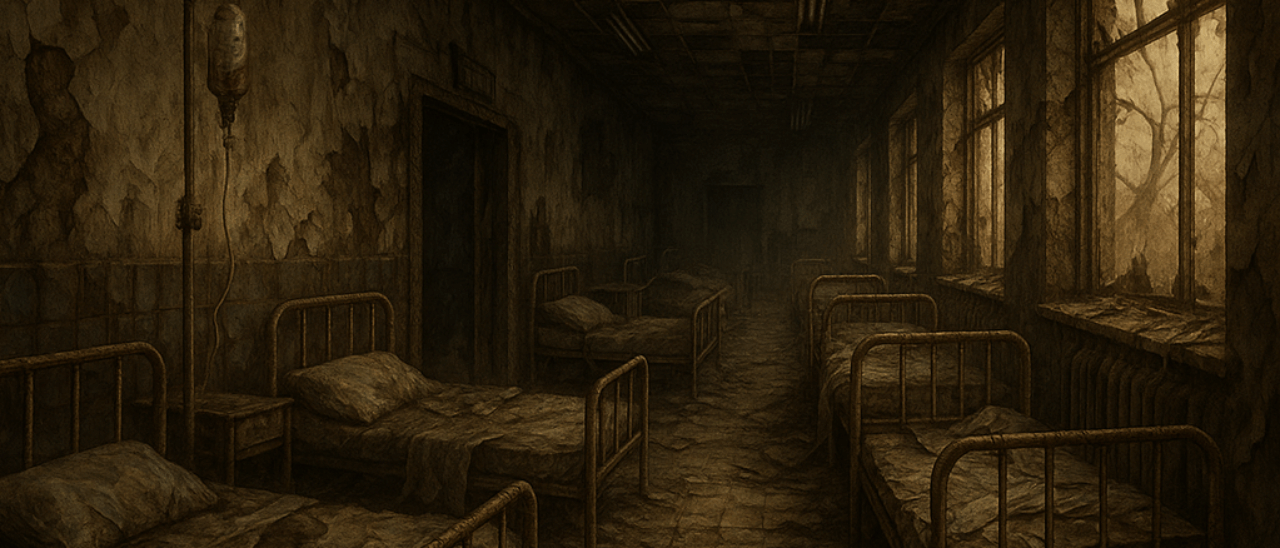
 As anyone who knows me well will tell you, I’ve been knee-deep in Fallout 76 lately. It’s the most current version of the series, and while it has its flaws, it also offers ongoing development, which keeps it engaging. Occasionally I jump back into one of the older games—nostalgia’s a hell of a drug—but right now it’s all about Appalachia.
If you’ve played the series, you’ll know the Mr. Handy robots. They’re multi-limbed floating relics with vaguely British accents and some of them are, well, less than friendly. One of their trademark phrases, often delivered right before they incinerate you with a flamethrower, is: “Here we go again.”
I’ve been saying that a lot lately. Not because I’m fighting off mutant mole rats, but because, like it or not, this phrase sums up my reality pretty well these days.
This post is part of my continued (if occasionally derailed) series on change. It’s taken me a while to figure out how to approach it, mostly because the last few years have been one avalanche of transformation after another. Some changes were slow and creeping; others came like a nuclear bomb. Either way, they reshaped my entire life.
Let’s recap:
– I transitioned from a long-term, stable career in healthcare to facing professional discipline and eventually retiring due to disability.
– I went from being a spouse in a long-term marriage to becoming a widow.
– I had to reckon with my own mistakes—some honest, some not so much—and the consequences that followed.
None of this was part of the plan. But here we are.
The hardest thing about change isn’t the event itself—it’s the reckoning. It’s looking back and realizing that even if something had to happen, it still hurts like hell. Before my professional world imploded, I’d already started questioning whether I could keep going. I loved my job, and I was good at it, but deep down I knew it was time to move on. Not because I was trying to run away or cover my tracks, but because my spirit—my health, my energy, my everything—was burned out.
And yes, I made mistakes. Colossal ones. I’ve said this before: not everyone in a lab coat is perfect. Nor should they be expected to be. “First, do no harm” is a guiding principle—not a guarantee that a provider won’t struggle or break down. But here’s the catch: the system doesn’t really care about that nuance. There’s no clause in any oath that says, “Take care of yourself, too.” And the institutions that regulate healthcare? They’re a hell of a lot more interested in punishment than prevention.
Let me be clear: I had a substance use problem. It’s a matter of public record. And like a lot of providers who go down that road, I had no idea where to turn for help until it was too late. The state I practiced in didn’t offer redemption—it offered investigation. The licensing board wasn’t interested in supporting recovery; they were interested in documenting failure.
The irony? I was sober while working. I never misprescribed or diverted medications for patient use. My harm was self-inflicted—and yes, still harmful, but not in the way the system paints with its broad, punitive brush. Even my boss—someone who could’ve easily hung me out to dry—was supportive and tried to help me connect with impaired provider programs. But when you’re already under scrutiny, those avenues slam shut. You’re not a clinician who needs help; you’re a liability that needs to be neutralized.
 So, one day I was a nurse practitioner, actively seeing patients. The next day, I was retired. Not just retired—retired on disability, which feels less like closing a chapter and more like the book being ripped out of your hands.
I’m adjusting, slowly. Change doesn’t care if you’re ready or not—it just shows up and moves in. Some days I wake up and feel almost okay with everything. Other days I’m back in that mental fallout shelter, wondering what the hell just happened.
But here’s what I’m trying to hold onto:
– Nobody is perfect. Especially not the people who are expected to be.
– Redemption should not be a myth. Especially not in healthcare.
– The system needs to stop punishing people for being human.
And most importantly:
Be the kind of person your dog thinks you are. And maybe your mom, too—depending on how much she liked you.
Here we go again.