
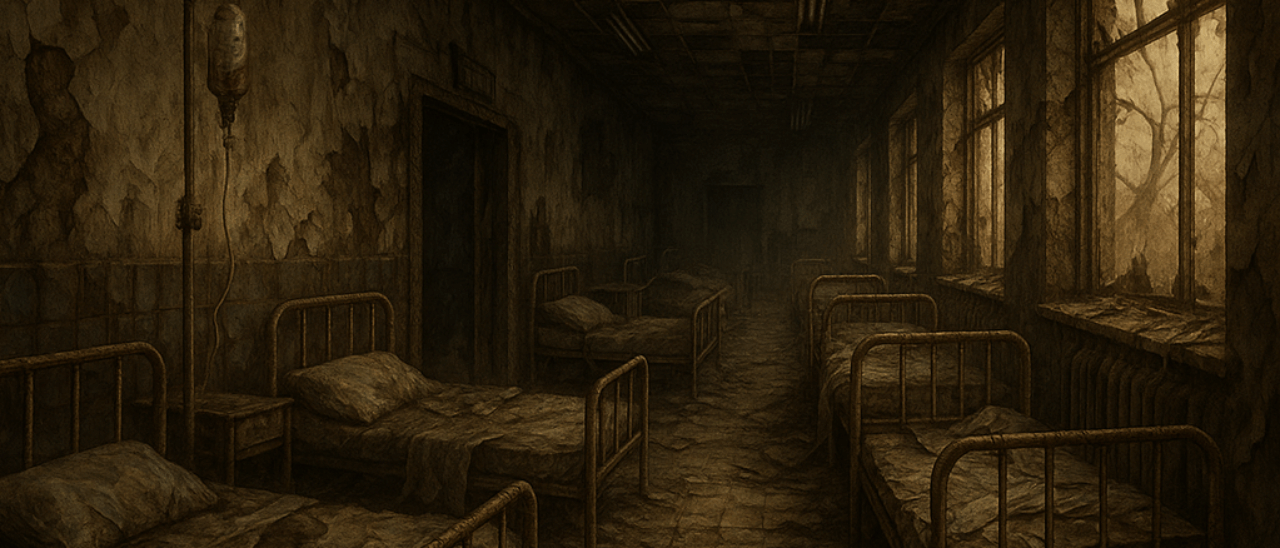
 I’ve slept like shit the last few nights—tossing, turning, always waking up in the middle of the bed, like the physical center somehow echoes the emotional void around me. As I was getting ready for bed last night, a thought kept bubbling up: God, I wish I had stopped ignoring the signs. I wish I’d done something sooner—anything—to get out of that abusive situation.
I know the statistics. I’ve worked with domestic violence survivors. It’s one of the first things you’re trained to screen for as a healthcare provider: look for signs of abuse. We all know the red flags. And yet, even when we know them, even when we teach others how to spot them… we still fall into the same traps ourselves.
The first step in abuse is simple but devastating: they condition you to believe it’s your fault. That’s the power of it. You invest in the relationship—emotionally, practically, spiritually—and the gaslighting begins. You start to believe that if things are bad, it must be because you’re doing something wrong. That it’s your job to fix it.
This is trauma bonding. It’s a repeated interaction with the abuser that shifts your mindset until you begin siding with them. It’s like Stockholm Syndrome in slow motion. You stop thinking about escape and instead become consumed with making things better. Because you believe—you truly believe—it’s your fault they’re hurting you.
“I didn’t want to hit you. You made me do it.”
Then the isolation starts. Subtle at first. I used to go out with friends, make plans. But slowly, the dynamic shifted. He didn’t want me going out—he wanted friends to come to our house. That way, he could control the narrative.
Then comes the campaign against your support system. A friend offers advice—something benign—and suddenly that friend is a “problem.” The abuser fabricates stories about you, spreads lies, turns people against you so they’ll help isolate you further. They make others believe you are the abuser, the unstable one, the manipulator. And just like that, the walls close in.
The next layer? Financial and housing dependency. This one snuck up on me. In the beginning—and for most of our relationship—he insisted on being the provider. He didn’t want me paying for things. At the time, it felt generous. Protective, even. But it was a trap. Because when you’re isolated, and your income isn’t enough to support housing, or you’ve lost opportunities to grow professionally, you’re stuck.
I read a case recently where the abuser wouldn’t let their partner keep a professional job. It was about more than control—it was about ensuring they couldn’t leave. Because if you have no money, no support, and no independence, the abuse becomes a prison.
Let me say this plainly: to an abuser, a victim is a toy. That sounds cruel and simplistic, but it’s painfully accurate. The most common profile is a narcissist—someone who feeds off ego and control. Physical violence is just a tool of punishment when the toy doesn’t behave. And when it happens, the victim is blamed. Always.
I’d love to say I’m out of that cycle. And in some ways, I am. But in other ways, I’m still very much inside of it. The cycle doesn’t end when they die. The trauma doesn’t dissolve with a funeral. There’s no instant closure, no neat little therapy bow to wrap it all up. It’s a long-term process, and even now, I react in ways shaped by 27 years of manipulation.
I carry regrets. So many of them. Especially in the last year. And I know they come from this long arc of systemic abuse. Bad habits—survival habits—don’t just disappear. They take time to unwind.
This next part may sound cruel, but it’s a thought I can’t shake: Suicide is a selfish act. I won’t sugarcoat that. And sometimes I wonder, in those final moments—was he thinking about how this would affect me long-term? Was this one last, perfect manipulation? Because honestly? It worked.
Even now, I’m isolated. Sure, my family’s back, and they’re wonderful. And I do have friends—just not many local ones. Most are at a distance. And sometimes, I wonder if that’s just easier for everyone involved. Easier to support me from afar.
One of my old sergeants major in Hohenfels, Germany, once said something on a particularly bleak morning:
“Great, you’ve had your bitch session. Now what are you going to do about it?”
What am I going to do about it?
Nothing.
Not because I’ve given up. But because, at this point, all I can really do is keep trying to be the best version of myself. And if that’s not enough for anyone, I don’t need to waste my time chasing their approval.
That’s harsh. But so is 27 years of trauma. After all that, I just want to live on my own terms. I’m not begging anyone to come back. I’m not playing PR rehab for other people’s misconceptions. I don’t control what others believe, and I don’t need to.
If nothing else, I know this: my dog, and my mom—before she died—were always my friends. Unconditionally. No manipulation, no gaslighting, no agenda.
And right now, that’s enough to keep going.