
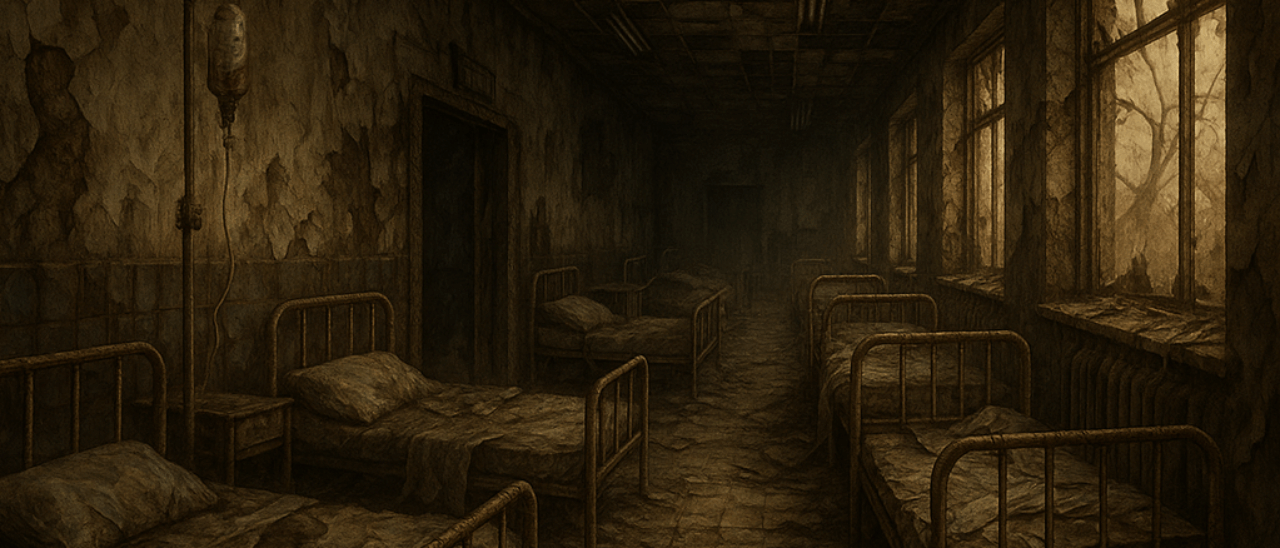
 I feel like I’ve coasted all day, drifting between sleepiness and scattered thoughts. Before retirement, I worked mostly night shifts for over a decade. I was glad to take them—after all, I’ve always been something of a Nurseferatu.
Today, I had a visit from some good friends passing through on their way to Burning Man. It’s that time of year again. I used to go—fifteen years straight, until grad school finally forced me to stop. Strange how different life looks in hindsight.
Funny thing about being up and moving at night: in adulthood, I’ve grown afraid of the dark. There was a time when I wasn’t. As a kid, I didn’t mind it at all. In the Army, I even liked it—darkness felt like a place where I was capable, focused, and ready. But combat changes things. My relationship with the night turned into something darker.
I was sexually assaulted during deployment. It happened around 2:30 in the morning during guard rotation—I was asleep and woke up to the kind of nightmare you don’t walk away from unchanged. Like many who experience military sexual trauma (MST), I never reported it. At that time, even before “Don’t Ask, Don’t Tell,” male-on-male rape was treated as “homosexual conduct” that could get you discharged. So, I stayed silent.
Instead of justice, I got interrogations. Hours with my platoon sergeant. Hours with Army CID, the military’s version of NCIS. I had to twist myself into coherence to survive. I learned silence. I learned secrets. And the toll was steep—it ended up costing me my Army career.
The military’s record with MST is grim. Too often, cases are dismissed with a shrug or covered up with a “boys will be boys.” Even today, reporting can mean retaliation or nothing at all. What MST taught me better than any security clearance briefing was how to keep a secret. I buried it, deep, for years—until a close friend shared his story and broke my silence.
That secret didn’t just stay in the military. It followed me into my marriage of 27 years, into the abuse, into the games of selective truth we learn to play just to survive. The longer you tell half-truths, the more you start to believe them yourself. It’s a defense mechanism, a survival strategy. But it also isolates you. And it eats away at you.
These posts I write aren’t just for an audience—they’re a way of processing. Of taking what’s been locked inside and turning it into words, however jagged. I’m not sure I’ve made peace with it all. Maybe I never will. But at least I’m saying it out loud now, instead of keeping it buried.
If there’s anything I’ve learned, it’s this: let your dog and your mom know what’s really going on. They’ll walk with you through hell and back, and help you find your way home.