
 As an odd piece of humor.
I was at my psychiatrist this week, and we were talking about the anniversary of my mother’s death. He asked, very earnestly, “How was your relationship with your mother growing up?”
Without missing a beat, I looked at him and said, “That’s awfully Freudian of you, isn’t it?”
I’ve known this man for at least fifteen years—first personally, later professionally, and now personally again—and I’ve only seen him belly-laugh maybe two or three times. This was one of them. It was actually kind of refreshing, it validated my dark humor.
A lot of people assume psychiatrists or therapists are aloof because they tend to be calm and measured. I’ve never felt that way with him, but I do understand how that perception can make people hesitant to engage in psychiatric care. Finding a good provider is hard. When the fit isn’t right, it’s important to keep looking—someone who can help you understand your feelings without being, for lack of a better term, adversarial to your treatment. I’ve been incredibly lucky in that regard.
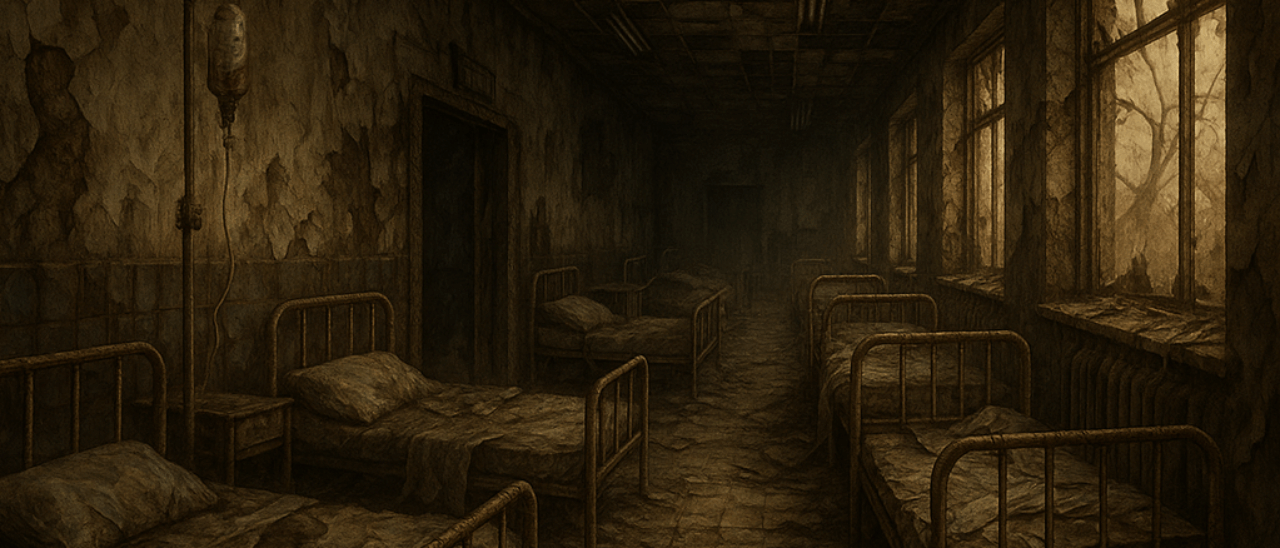
The Fallout games—and now the TV series—continue to be a welcome diversion from life.
The series is progressing nicely, especially in this second season. A lot of effort has gone into rounding things out and plugging holes in the game’s storyline. In the games themselves, much of the narrative is hidden in terminal entries and scattered clues while you’re completing quests. If you’re not deliberately looking for it, you can miss huge chunks of story. I’ve always felt that’s a bit of a flaw.
I get it—sometimes you just want to finish the quest and move on. But there’s something to be said for slowing down, going back, reading the entries, and actually listening to what the NPCs have to say.
That turns out to be a decent analogy for life.
So often, we rush through things trying to get to the end of the quest, instead of paying attention to the people and moments along the way. Modern games work hard to balance streamlined gameplay with meaningful backstory. Maybe we could take a lesson from that.
The game forges on, of course. This weekend—or maybe next—we’re being “treated” to another periodic event. I really only have one favorite event in the game, and while the others can be fun, the payoff often feels underwhelming. Still, when one pops up, I usually run to it anyway—for the experience, the absurdity, or sometimes both.
This particular event centers around the cult of a beloved West Virginia cryptid: the Mothman. It starts at the Mothman Museum in Point Pleasant, West Virginia, which—yes—is a real place. The quest itself is pretty mundane, but it comes with some fun rewards and plenty of atmosphere.
And this is usually where I pivot and say something like: the post-apocalyptic world somehow makes more sense—and feels less frightening—than reality right now.
This week, the people responsible for maintaining the Doomsday Clock announced the current time until midnight. If you’re unfamiliar with it, midnight represents global catastrophe, and the clock is adjusted based on the accumulation of existential threats—nuclear, environmental, political, and social.
They’ve set it at 85 seconds to midnight.
There have been moments throughout history when the clock has been close to midnight, but we’ve never been this close—not even during events like the Cuban Missile Crisis.
I’ve said many times that I try to keep this blog apolitical. There are plenty of places for political hot takes. That said, it’s hard to ignore the increasing divisiveness and unrest that threaten not just this country, but global stability.
I’ve always valued being direct—saying what needs to be said, not being afraid of uncomfortable truths. I still believe in that. But somewhere along the way, we seem to have shifted from speaking honestly to shouting relentlessly. Being loud is not the same thing as participating in meaningful discourse.
In simple terms: just because you feel something doesn’t mean you need to scream it at everyone, all the time. Boundaries matter. Non-participatory, antagonistic behavior doesn’t help anyone.
Why does this matter to me?
Partly because more of us need to say this out loud. And partly—if I’m being honest—because I spent twenty-seven years living with a narcissist. Leaving that environment was mentally freeing. For a brief period, narcissism and bad behavior were finally on the back burner, and it was peaceful.
Turning on the news now feels like watching that same behavior handed a microphone.
For someone still unpacking years of emotional damage, it’s exhausting. There’s no reason any of us should have to tolerate this level of hostility simply because someone insists on broadcasting their unfiltered inner monologue.
I’ve watched friends turn on each other recently because being abrasive is suddenly fashionable. So here are my two words for that trend: Stop it.
Your beliefs can be yours without being borrowed wholesale from someone else. Participate. Engage. Listen. Treat people as individuals—not as stereotypes, not as “minorities,” not as caricatures.
I try very hard to do that. But as someone who exists in a minority group, I’ve learned that bias often shows up long before my actual viewpoints ever enter the conversation.
The constant tension created by this self-centered behavior has made it harder for me to function. Not because the world needs to cater to me—but because past trauma makes compensating for this chaos increasingly difficult.
Honestly, it’s made me withdraw. Going out in public feels less worth the effort some days. When the world feels this polarized, it’s easier to fire up the PlayStation and return to Fallout.
I’ve said it before, and I’ll say it again: it’s deeply sad when a post-apocalyptic wasteland feels more welcoming than the real world.
As always, my dog—and my mom—help me face that reality. Even though she’s gone, my sister and I can still hear her voice in our heads when something ridiculous happens. Talking about my relationship with her this week brought back stability, warmth, and gratitude. The gifts she gave me were worth more than any money could ever buy.
So do me a favor. Be kinder. Be better—not just for yourself, but for the stability of the planet.
I can promise you this: it’s exactly what your dog and your mom would want.