
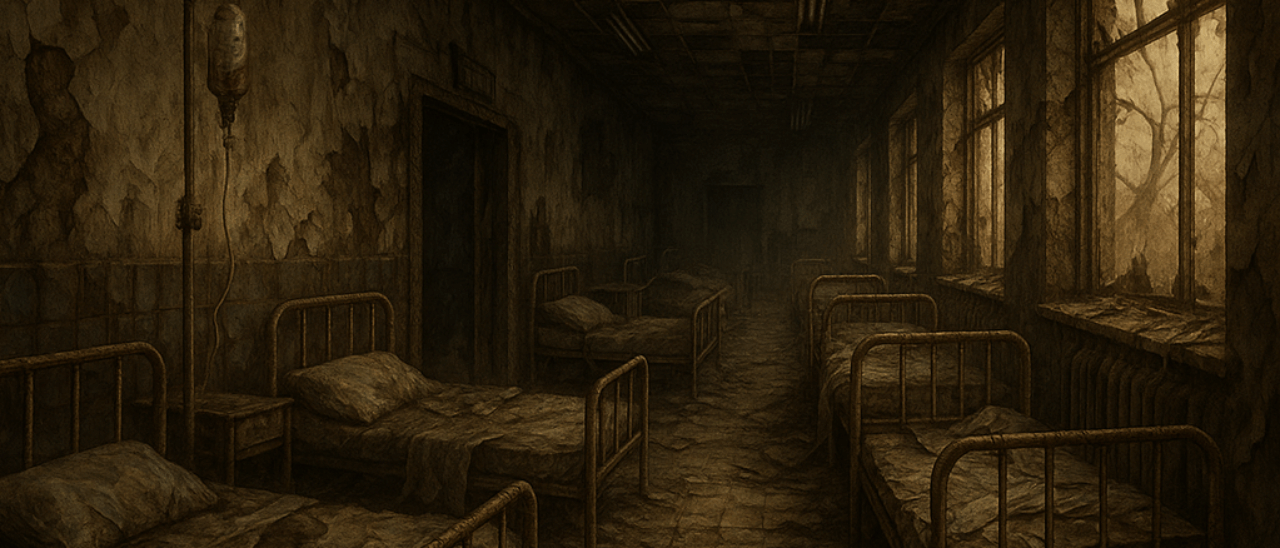
 I sometimes think my generation grew up like Vault Dwellers before the vault doors were even built.
Gen X kids were raised on the constant assumption that something was going to end everything. Nuclear war. Environmental collapse. Mutually assured destruction. We practiced duck-and-cover drills with the same enthusiasm kids today practice active shooter drills. Different decade, same anxiety.
The message was clear:
Don’t get too comfortable.
Then… nothing happened.
Instead of the apocalypse, we got middle age. Student loans. Bad knees. News alerts. And the unsettling realization that we spent decades preparing for the end of the world and absolutely no time preparing for what comes after it doesn’t end.
This is probably why Fallout hits the way it does.
The wasteland makes sense.
It’s honest.
Everything is already broken.
In Fallout, you’re not surprised by collapse — you’re operating within it. Society failed, corporations lied, technology outpaced ethics, and somehow you’re still expected to scavenge, build, and keep going. That’s not escapism. That’s familiarity.
Vault-Tec promised safety and delivered experiments.
Corporations promised progress and delivered profit.
We were promised flying cars and got subscription fees.
So when people ask why Fallout is comforting, this is why.
It’s a world where the worst already happened, and you’re still here.
No pretending everything is fine.
No magical thinking.
No insistence that belief alone will save you.
Just competence, adaptation, dark humor, and the understanding that survival isn’t heroic — it’s practical.
We don’t play Fallout because we want the apocalypse.
We play it because we were raised expecting it, and the real world keeps gaslighting us by pretending it isn’t slowly happening anyway.
The irony is that Fallout isn’t about the end of the world.
It’s about what people do after.
And for a generation that grew up waiting for the sirens, that feels weirdly… reassuring.