
 The Apocalypse We Prepared For (and the One We Didn’t)
I had a strange bout of insomnia in the middle of the night. Thankfully, with my newer medication regimen, those nights have become rare. But when I did wake up, my brain immediately locked onto something—and once that happens, there’s no going back to sleep.
My mind wandered to a movie from a very long time ago. Early 1980s long ago. Blade Runner, which was based on a book by Do Androids Dream of Electric Sheep?, written by Philip K. Dick.
Blade Runner is often described as “alternate history,” largely because it imagined the future—specifically 2019—very differently than how things actually turned out. Flying cars. Off-world colonies. Massive technological leaps. And, of course, a ruined Earth shaped by environmental collapse and endless wars.
Are you seeing a theme here?
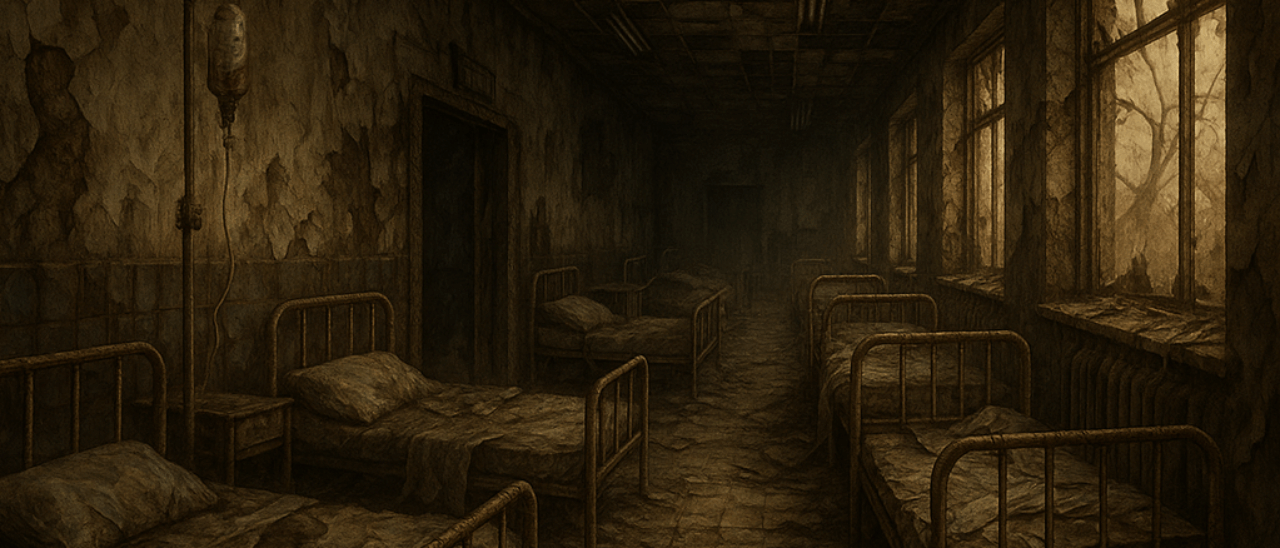
As a card-carrying member of Gen X, our entire upbringing was steeped in the assumption that the future was… not going to end well. Nuclear annihilation. Environmental collapse. Waking up one day to either nothing at all—or a post-apocalyptic wasteland.
Either way, we felt pretty screwed.
I sometimes wonder if we spent so much time bracing for the apocalypse that we never really learned what to do after it didn’t happen. Or maybe worse—we’re still waiting for it.
Still…
This movie came out in 1982.
Why the hell don’t we have flying cars?
Progress, Control, and the Fear of Knowing
I attended a seminar years ago focused on scientific advancement and future technologies. Someone eventually asked the flying-car question. The panel’s answer surprised a lot of people:
Organized religion.
Before anyone clutches pearls or starts drafting an angry email, let me be very clear:
I said religion, not spirituality.
Those two things are often conflated, largely because many of us were raised with spirituality filtered through institutions—through “learned men of God” who told us what belief was supposed to look like.
Religion, historically, has had a vested interest in control.
If you doubt that, look no further than Galileo Galilei. He was tried for heresy by the Catholic Church for suggesting—based on observation—that the Earth orbited the sun. This contradicted an Earth-centric model endorsed by the Pope at the time. The result? Arrest, trial, and centuries of scientific stagnation fueled by superstition.
The Church, at that point in history, was more powerful than most governments. And control—of money, knowledge, and people—required limiting what the masses were allowed to understand.
Sound familiar?
We seem to be flirting with that same trajectory again, but that’s probably a different post for a different blogger.
Medicine, Missed Leaps, and Profitable Stagnation
The same forces that stalled astronomy also show up in modern healthcare.
In Star Trek, the doctor waves a handheld device over a patient and instantly knows what’s wrong. That leap isn’t unreasonable—it’s aspirational. And yet, we’re still inching forward instead of leaping.
One of my college roommate’s fathers held the patent for the pulse oximeter—the little clip they put on your finger to measure oxygen saturation and pulse. When he developed it, he was repeatedly told it wasn’t possible.
That was 1986.
It’s now 2026, and pulse oximetry remains a gold standard.
And yet, where are the comparable leaps in diagnostics? In disease monitoring? In prevention?
We like to believe we’ve “figured out” antibiotics and infectious disease. We haven’t. Resistant bacteria are increasingly difficult—and sometimes impossible—to treat. The technology exists, but innovation gets buried, delayed, or outright blocked.
Why?
Because treating chronic illness is far more profitable than curing it.
Cancer. HIV. Autoimmune disease. We can suppress, manage, and prolong—but curing disrupts revenue streams. I hate sounding conspiratorial, but this isn’t paranoia; it’s economics.
The same logic that once kept people ignorant to maintain religious power now keeps people sick to maintain financial power.
Faith, Evidence, and Magical Thinking
Again, I’m not attacking spirituality.
I am attacking blind faith.
Healthcare suffers when superstition replaces evidence, when magical thinking replaces critical reasoning. Prayer alone gives you roughly a coin-flip chance of improvement. Medical intervention gives you significantly better odds.
And who’s to say that a divine being wouldn’t want human intervention involved?
“The Lord helps those who help themselves.”
I’ve always interpreted that as: divine assistance still requires human effort.
The real apocalypse won’t come from bombs or climate collapse.
It will come from superstition.
Believe whatever you want—but don’t ignore evidence because it makes you uncomfortable.
Tears in Rain
At the end of Blade Runner, there’s a monologue that still hits hard:
“I’ve seen things you people wouldn’t believe. Attack ships on fire off the shoulder of Orion. I watched C-beams glitter in the dark near the Tannhäuser Gate. All those moments will be lost in time, like tears in rain. Time to die.”
Experience shapes who we are. Every one of us carries a different set of memories, fears, and truths.
Just don’t assume your experience is so universal that everyone else must live by it.
And as always—
Share your experiences with your dog.
And your mom.
I genuinely think we’d all be healthier with less superstition and more curiosity.